According to McKinsey, AI adoption has more than doubled in recent years across industries. Gartner reports that a large share of organizations are already using or planning to use AI in production systems.
As an AI development company, we work with organizations at different stages. Some need to explore how AI can be applied to their product. Others already have models but require a stable system around them.
Consulting
As an AI development agency, we start by assessing whether AI is a practical solution for the problem at hand. The focus is on use cases, data availability, and expected outcomes. In many situations, simpler approaches are more effective. This step helps define where AI adds value and where it introduces unnecessary complexity.
Custom AI software development
AI software development solutions are typically built around specific workflows and constraints.
We design systems that combine data processing, model logic, and integration into existing applications. The emphasis is on solutions that can be maintained and extended, not just initial implementations.
Generative AI solutions
Generative models are effective when their behavior is controlled. We structure these systems around clear inputs, context handling, and output validation. This reduces variability and ensures that results remain aligned with the intended use.
Assistants and chatbots
Assistants and chatbots depend on how well they connect to real data. We build systems that can interpret requests, access relevant information, and respond within defined limits. This avoids the common issue of unreliable or overly generic answers.
Machine learning model development
Model development is approached with a focus on production use. This includes selecting appropriate methods, preparing data, and validating results in realistic scenarios. The goal is to ensure the model remains stable after deployment.
Artificial Intelligence integration
AI components are most useful when they are part of a larger system.
We integrate models into existing platforms, handling data flow, APIs, and performance considerations so that AI functions as a reliable system component.
Natural language processing (NLP)
Natural language processing is applied to tasks such as classification, extraction, and text understanding. We design NLP systems that handle domain-specific language while maintaining consistent results across different inputs.
How we build AI solutions that deliver results
AI systems require a structured approach to reduce uncertainty and ensure practical outcomes.
Problem definition
The use case is defined in terms of measurable outcomes and available data.
Data assessment
Data sources are evaluated for quality, completeness, and relevance.
Solution design
The overall system is defined, including model choice and integration points.
Model development
Models are trained, tested, and validated against real scenarios.
Integration
AI components are connected to existing systems and workflows.
Evaluation and iteration
Performance is monitored and improvements are introduced as needed.
Our portfolio
We have worked on AI-related projects across different domains, including automation, data analysis, and customer-facing applications.
Some projects focused on building new systems from the ground up. Others involved integrating AI into existing products where data and workflows were already established.
The common objective is to ensure that AI supports the product in a practical and sustainable way.
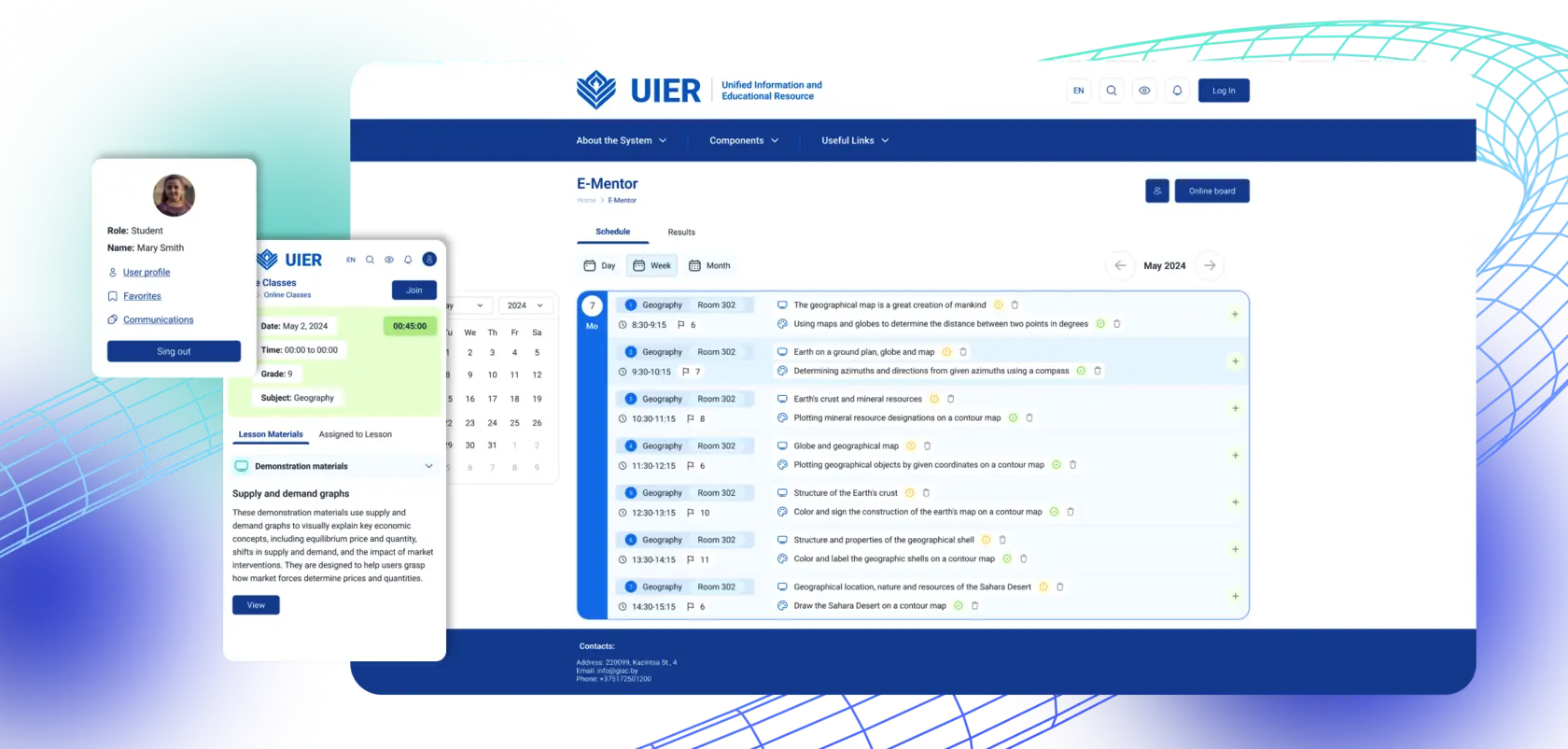
We developed a student knowledge base, lesson creation tools, and modules for tests, simulators, and viewing materials, all integrated with educational organizations’ business process systems.
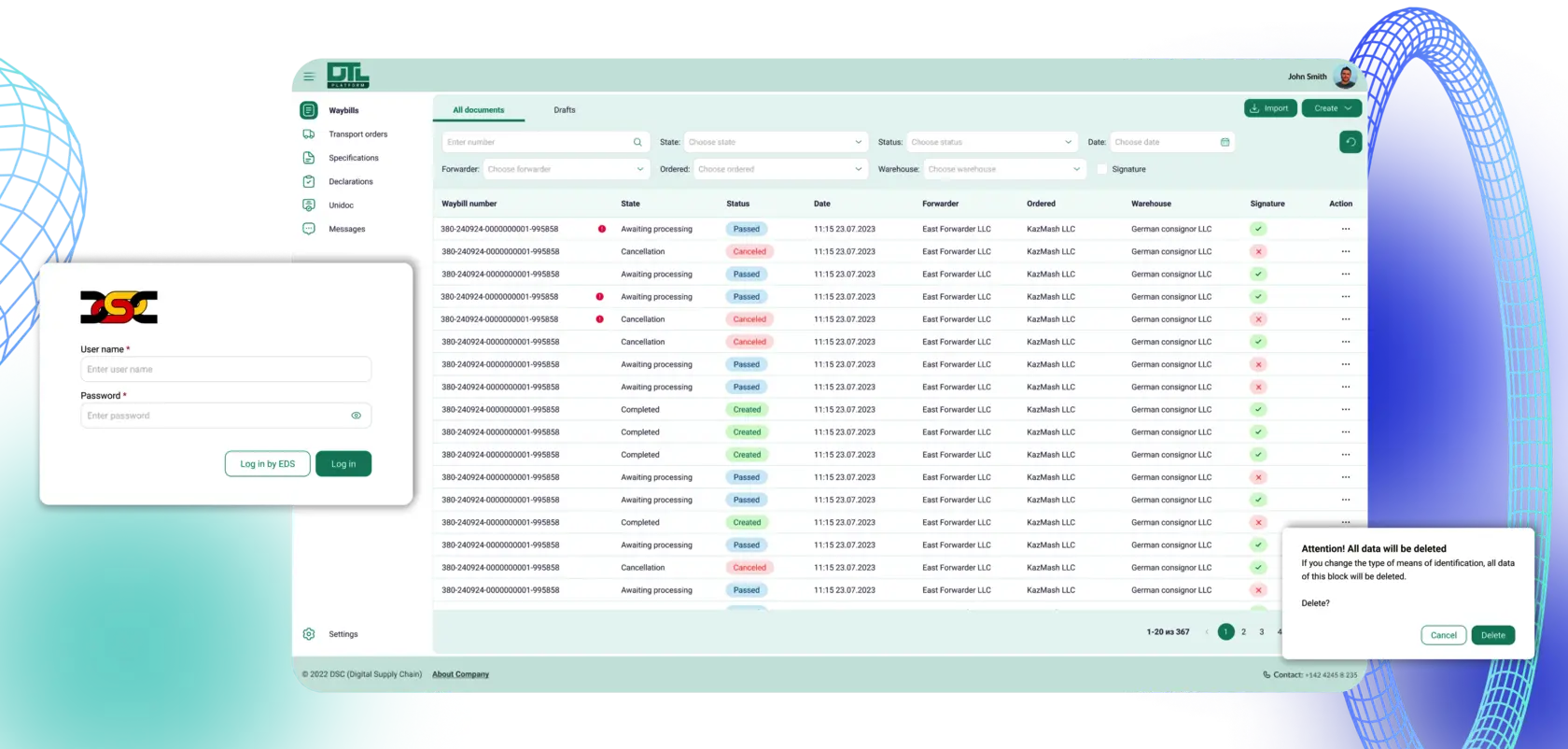
CompleteSoft developed Digital Trade Logistic Platform which includes a vehicle and driver directory, a mobile app with GPS monitoring, and a system for planning and executing transport requests.
Result: 25% reduction in transportation planning time.
UComplete is a service designed for life insurance companies. It is an integrated web-based system that allows insurance company clients to independently create and sign insurance policies electronically over the Internet.
ExamComplete is a digital platform for U.S. insurance companies, enabling medical professionals to electronically sign life and health insurance policies with clients online.
A custom-built Eurasian logistics platform that unifies all freight stakeholders into a single digital ecosystem and scalable cross-border e-logistics integration.
Result: presence in 20 countries, 7 million users.
A custom AI logistics agent was designed and implemented to automate document processing, shipment coordination, multilingual communication, and risk analytics with full integration into the existing TMS.
Result: 70% reduction in manual document processing.
CompleteSoft’s AI Assistant transformed the tourism company’s customer support by delivering instant, multilingual, and personalized responses that boosted conversions while cutting response time and operational costs.
Why businesses choose us for Artificial Intelligence development
Organizations usually look for an AI development company when they need to move from experimentation to production systems.
Several factors tend to influence this decision:
Focus on practical outcomes
Work is aligned with measurable business results rather than theoretical performance.
Integration with existing systems
AI components are designed to fit into current platforms and workflows.
Controlled use of generative models
Outputs are managed to ensure consistency and reliability.
Understanding of data constraints
Solutions are adapted to the quality and structure of available data.
Maintainable system design
The resulting system can be updated and extended without major rework.
Clear technical communication
Decisions and trade-offs are explained in a way that supports informed planning.
What clients say about our development services
“We especially liked their flexibility. When there was a need to integrate an additional module, the team quickly adapted to the changes, which allowed us to complete the project with new requirements in a short time.”
“CompleteSoft’s work led to a 60% reduction in manual work and a 25-30% increase in order processing speed. The team was easy to communicate with, quick to answer, and always ready to clarify things. CompleteSoft’s project management was great; they always answered questions and delivered on time.”
AI development is often part of a broader system. We also provide backend, frontend, and full-stack development, especially in projects where AI components need to be integrated into existing platforms.
Custom software development
MVP development
Web development
Cross-platform development
Al development
Frontend development
Backend development
We choose technology that suits best your specific business goals!
AI development usually involves several layers rather than a single task. In most projects, we work with data preparation, model development, system integration, and post-release support.
Data preparation includes collecting, cleaning, and structuring information so it can be used effectively. Model development focuses on selecting appropriate methods and validating their behavior. Integration ensures that the model works as part of an existing system rather than in isolation. After deployment, the system is monitored and adjusted as it interacts with real data.
The exact scope depends on the problem, but the goal is always to build something that can be used in practice and maintained over time.
How do you decide if AI is the right solution?
This decision is based on the nature of the problem and the available data.
Some tasks benefit from machine learning or generative models, especially when patterns are difficult to define explicitly. In other cases, simpler approaches such as rule-based logic or structured queries are more reliable and easier to maintain.
We evaluate expected outcomes, acceptable error levels, and operational constraints before recommending an approach. The objective is to avoid unnecessary complexity while still solving the problem effectively.
Can you work with existing AI models?
Yes. Many projects start with models that already exist but are difficult to use in practice.
In these cases, the issue is often not the model itself, but how it is integrated or how its inputs and outputs are handled. We review how the model behaves in real conditions and improve the surrounding system so it becomes more reliable and easier to work with.
This may involve adjusting data pipelines, refining prompts, or introducing validation mechanisms.
How do you handle data quality issues?
Data quality is one of the main factors that affects AI performance.
We address this early in the process by analyzing how data is collected, stored, and used. Common issues include missing values, inconsistent formats, and lack of labeling.
Depending on the situation, this may involve cleaning the data, restructuring it, or defining additional rules for how it should be processed. In some cases, the limitations of the data also define what level of accuracy can realistically be achieved.