The backend is not visible to users, but it defines how a product behaves. Response time, data consistency, and system stability are all determined at this level. When these aspects are not handled properly, the result is immediately noticeable — even if the interface itself is well designed.
At CompleteSoft, backend development is approached as a structural part of the system. The focus is on how data is processed, how the system behaves under load, and how it can evolve without introducing instability or unnecessary complexity.
Mobile back-end development
As a back-end development agency, we design backend systems for mobile applications where network conditions are inconsistent and response expectations are high.
The main requirement in this context is predictability. Requests must be handled efficiently, but also consistently when connectivity is limited or unstable. Data integrity must be preserved even when operations are interrupted.
Web back-end development
Web systems typically increase in complexity over time as features, integrations, and user roles expand.
Backend development here is not limited to adding functionality. It involves maintaining a structure where business logic remains explicit and dependencies between components are controlled. This allows the system to grow without becoming difficult to manage.
Cloud-based solutions
Cloud infrastructure provides flexibility, but also increases system complexity.
Effective use of cloud services requires clear boundaries between components, controlled data flow, and a well-defined approach to failure handling. Without this, systems become difficult to reason about and maintain.
API development & integration
A consistent and well-structured API reduces complexity across the product. It simplifies frontend development, supports integrations, and allows changes to be introduced without widespread impact.
Audit & optimization
Existing backend systems often contain inefficiencies that are not immediately visible.
These may include slow queries, unnecessary processing, or architectural limitations that affect performance. Identifying these issues requires analysis of actual system behavior rather than assumptions.
Refactoring
Refactoring restores clarity without changing external behavior. It reduces coupling, simplifies logic, and makes the system easier to modify. This process is typically incremental, focusing on areas where improvements have the greatest impact.
Consulting
Sometimes the main problem is not implementation, but direction.
We work with teams that need to validate architecture decisions, understand scalability limits, or rethink how their backend is structured. This usually involves reviewing existing systems and identifying where complexity is unnecessary or where risks are underestimated.
Process of delivering back-end services
The process is structured to reduce uncertainty and allow early validation of key decisions.
Requirements clarification
The system is defined in terms of real usage, constraints, and expected load.
Architecture definition
Responsibilities, data flow, and system boundaries are established.
Incremental implementation
Functionality is delivered in parts that can be validated early.
Continuous integration
Connections with other systems are introduced progressively to expose issues early.
Behavioral testing
The system is evaluated under realistic conditions, including failure scenarios.
Deployment and observation
After release, system behavior is monitored and adjusted as needed.
Our portfolio
We’ve worked on backend systems that serve different roles. Our track record includes internal tools, customer-facing platforms, and systems that connect multiple services together.
In some cases, the work involved building a backend from scratch. In others, it was dealing with legacy systems. The context changes, but the pattern is consistent. The backend has to support the product over time.
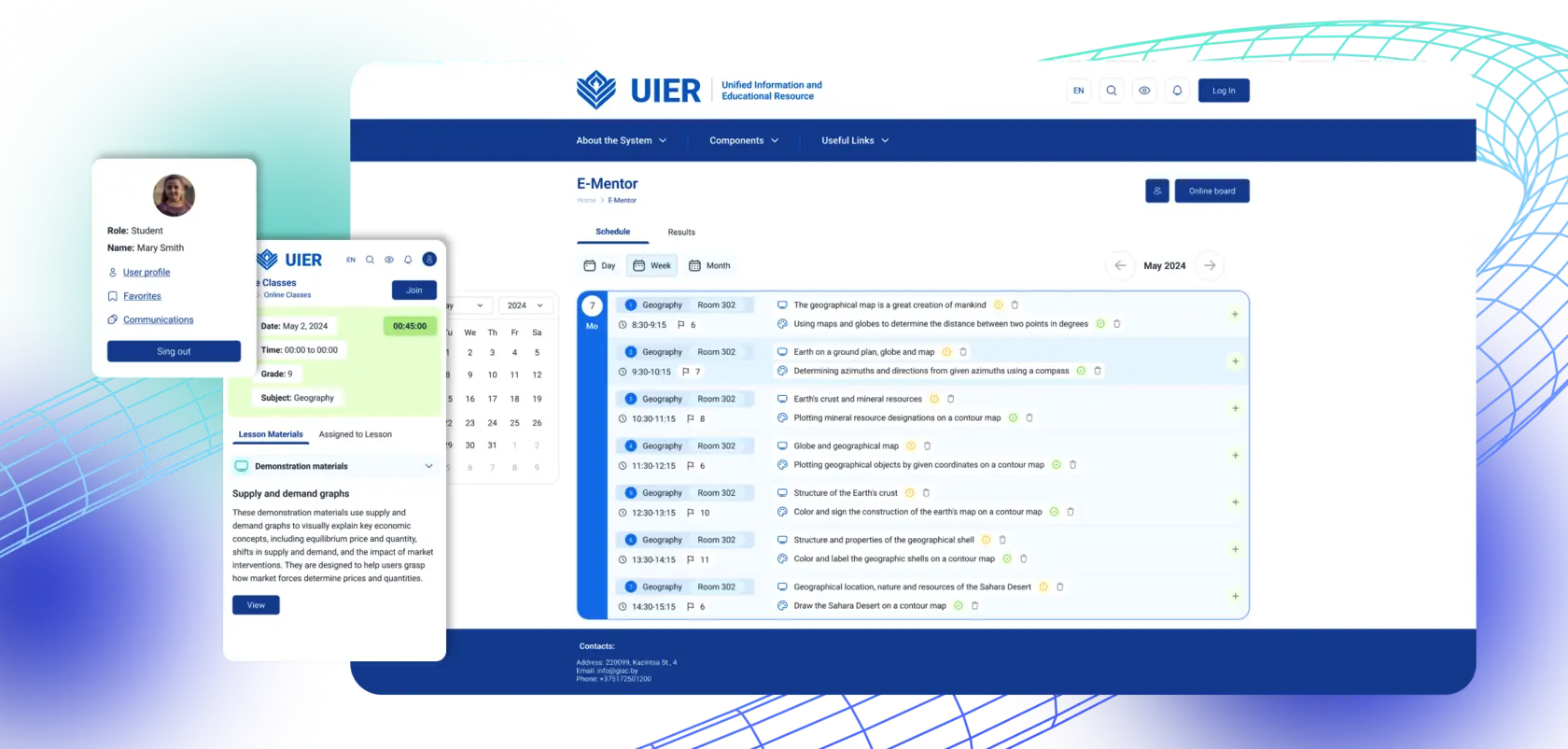
We developed a student knowledge base, lesson creation tools, and modules for tests, simulators, and viewing materials, all integrated with educational organizations’ business process systems.
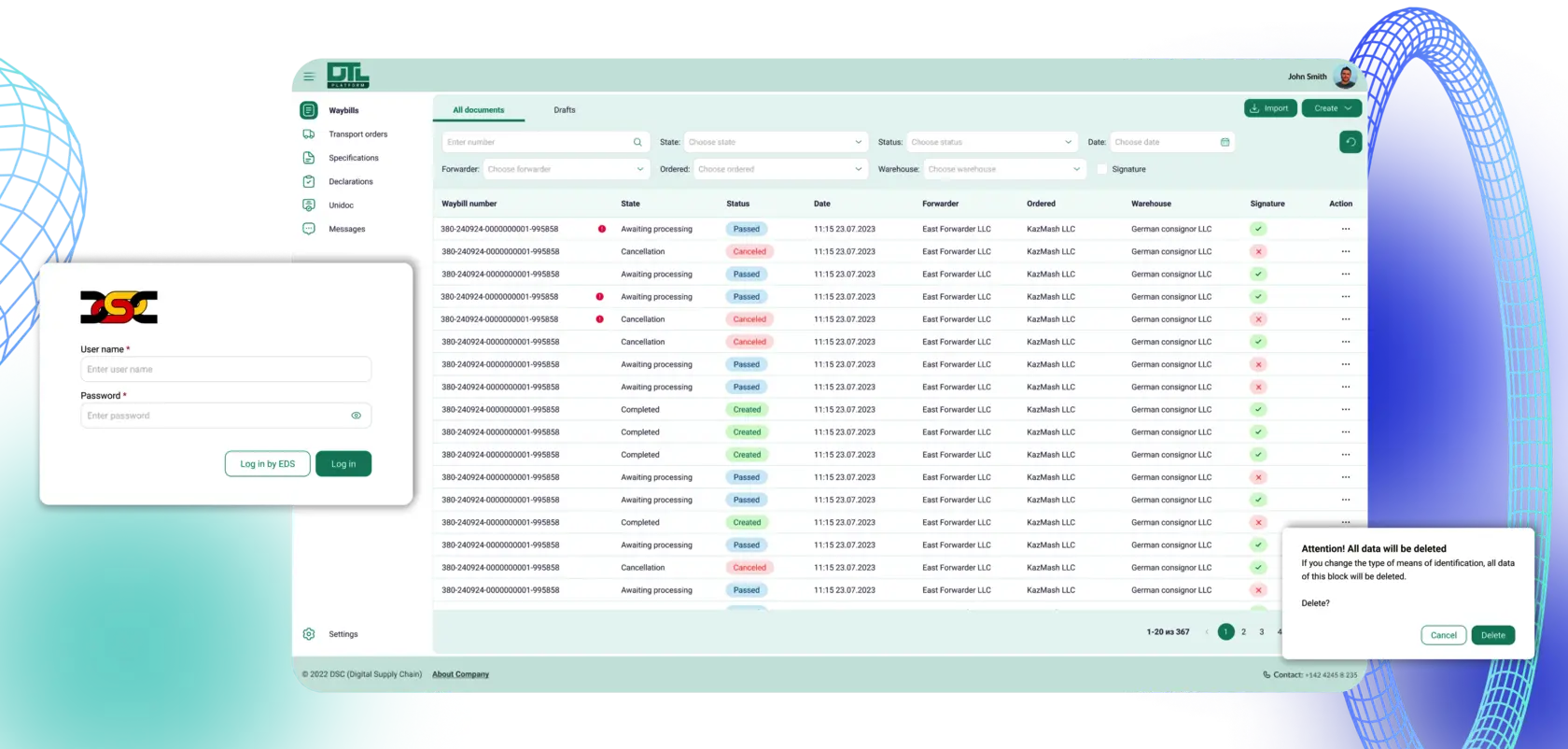
CompleteSoft developed Digital Trade Logistic Platform which includes a vehicle and driver directory, a mobile app with GPS monitoring, and a system for planning and executing transport requests.
Result: 25% reduction in transportation planning time.
UComplete is a service designed for life insurance companies. It is an integrated web-based system that allows insurance company clients to independently create and sign insurance policies electronically over the Internet.
ExamComplete is a digital platform for U.S. insurance companies, enabling medical professionals to electronically sign life and health insurance policies with clients online.
A custom-built Eurasian logistics platform that unifies all freight stakeholders into a single digital ecosystem and scalable cross-border e-logistics integration.
Result: presence in 20 countries, 7 million users.
A custom AI logistics agent was designed and implemented to automate document processing, shipment coordination, multilingual communication, and risk analytics with full integration into the existing TMS.
Result: 70% reduction in manual document processing.
CompleteSoft’s AI Assistant transformed the tourism company’s customer support by delivering instant, multilingual, and personalized responses that boosted conversions while cutting response time and operational costs.
Customers typically look for a backend development company when systems become difficult to scale or maintain.
In practice, several factors determine whether the system remains viable over time:
Predictable behavior under load
Systems are designed to handle real traffic patterns, including spikes and partial failures.
Clear and stable architecture
Defined boundaries allow the system to evolve without introducing hidden dependencies.
Scalability aligned with actual demand
The system can grow where necessary without unnecessary complexity.
Consistent data handling
Data storage and access patterns are designed to prevent conflicts and inconsistencies.
Controlled integrations
External dependencies are isolated to prevent cascading failures.
Maintainability over time
The structure remains understandable for developers who work on the system later.
What clients say about our back-end development services
“We especially liked their flexibility. When there was a need to integrate an additional module, the team quickly adapted to the changes, which allowed us to complete the project with new requirements in a short time.”
“CompleteSoft’s work led to a 60% reduction in manual work and a 25-30% increase in order processing speed. The team was easy to communicate with, quick to answer, and always ready to clarify things. CompleteSoft’s project management was great; they always answered questions and delivered on time.”
Backend systems are closely connected to everything around them. We also work on front-end development and full-stack solutions, especially in projects where both layers need to evolve together. In some cases, we take full responsibility for delivery. In others, we work as part of an existing team.
Custom software development
MVP development
Web development
Cross-platform development
Al development
Frontend development
Backend development
We choose technology that suits best your specific business goals!
What is included in your back-end development services?
In most cases, we are responsible for everything that happens on the server side. That includes business logic, data storage, API design, and system behavior under load. The exact scope depends on the project, but the focus is always on making the system reliable and understandable.
How do you approach performance in backend systems?
Performance is primarily a question of structure. If data access patterns are inefficient or responsibilities are not clearly separated, no amount of optimization will fully solve the problem.
We focus on query efficiency, proper use of caching, and reducing unnecessary processing. More importantly, we try to make performance predictable, so the system behaves consistently under different conditions.
Can you work with an existing backend that has issues?
Yes, and this is a common situation.
We usually start by understanding how the system actually behaves, not just how it is supposed to work. From there, we identify the parts that create the most friction and improve them gradually. Full rewrites are rarely necessary and often introduce additional risk.
How do you handle scalability?
Scalability is not just about handling more traffic. It is about ensuring that the system structure allows parts of it to grow without affecting everything else.
We design services so they can scale independently where needed, while keeping the overall system understandable.
How do you make sure the backend remains maintainable?
Maintainability depends on clarity.
We aim to keep responsibilities well-defined, data flow explicit, and dependencies limited. This makes it easier to change the system later without unintended side effects.
Do you provide support after release?
Yes. Most backend systems require ongoing adjustments once they are exposed to real usage.
We usually stay involved to monitor behavior, address issues, and support further development.
How long does a typical backend project take?
It varies depending on complexity and constraints. From our experience, smaller systems can be built in a few weeks, while more complex platforms require several months or ongoing development. What matters more is how the work is structured, especially when requirements evolve.
How do you communicate during the project?
Communication is kept direct and focused on the system itself.
We usually rely on regular check-ins and working results rather than detailed reports. It is easier to discuss a system when you can see how it behaves.