Modern products are experienced through the interface first. People don’t separate design, speed, and functionality. Users just decide whether something feels easy to use.
About 53% of mobile users leave a page if it takes more than 3 seconds to load, and even a 1-second delay can reduce conversion by about 7%. At the same time, mobile traffic currently accounts for more than half of all web traffic in the world.
Therefore, front-end decisions directly affect how many users stay, how many convert, and how your product is perceived. At CompleteSoft, except for visuals, we pay attention to how front-ends behave under real conditions like slower networks, inconsistent data, and everyday user behavior.
HTML, CSS & JS development
As a front-end development agency, we often start with the basics to define everything that comes after.
Good HTML structure affects accessibility and SEO. CSS decisions influence how easy it is to change the interface later. JavaScript controls how the product behaves when real users start interacting with it.
We usually avoid unnecessary complexity by keeping the styles consistent and making the interface work the same in different browsers and with different screen sizes.
Single-page app development
In such cases, the main problem is managing how data moves through the app and how the interface reacts to it. If this part is designed incorrectly, the application becomes difficult to expand.
We create an SPA using frameworks such as React, Vue or Angular, depending on the context. The focus is usually on how components are organized, how status is handled, and how updates are managed without compromising performance.
Progressive web app (PWA) development
The technical part here is relatively simple – service workers, caching strategies, and installation tips. The hardest part is deciding what should work offline, how updates are delivered, and how not to confuse the user when the app behaves differently depending on the connection. However, we have been successfully solving these problems for many years.
Front-end for mobile & cross-platform
Front-end work does not stop at the browser. Many projects require shared logic between web and mobile applications.
In these cases, we work with tools like React Native or Flutter and focus on keeping behavior consistent. Instead of making everything identical, we understand where platforms should differ and where they shouldn’t.
Legacy front-end modernization
A lot of front-end work happens in systems that already exist. We usually don’t recommend rewriting everything from scratch. It’s more practical to improve everything step by step. This may mean restructuring parts of the codebase, reducing dependencies, or implementing clearer patterns.
Third-party integration
Most products depend on external services such as payments, analytics, cards, and communication tools. From an interface perspective, the challenge is to deal with delays, disruptions, and inconsistent responses in a way that doesn’t affect the user experience. We try to make these integrations predictable so that the application works well, even if external systems don’t.
How we provide bespoke software development services
We focus on making the process clear and structured from the beginning, while still leaving room to adjust as the project evolves.
Understanding the context
We start by understanding what the product is intended for and who will use it. This part often reveals limitations that are not obvious in the initial requirements.
Defining what actually needs to be built
Then we define a structure that can support the product as it grows. This includes choosing tools, but more importantly, deciding how the codebase will be organized.
Building in iterations
Implementation usually takes place in small steps. Instead of creating everything at once, we focus on those parts that can be tested and approved at an early stage.
Backend integration
Integration with backend systems happens in parallel, not at the end. This helps avoid surprises when real data is introduced.
Testing in realistic conditions
Performance is constantly being reviewed. It's easier to do everything quickly than fix it later.
Ongoing support
After the release, we continue to support changes, improvements, and non-standard solutions that only appear in real use.
Our portfolio
We’ve been working on internal tools, customer-facing platforms, and products that fall somewhere in between. In some cases, the goal was a quick launch by a small team. In others, it was to increase the stability of systems that already had users and could not afford downtime.
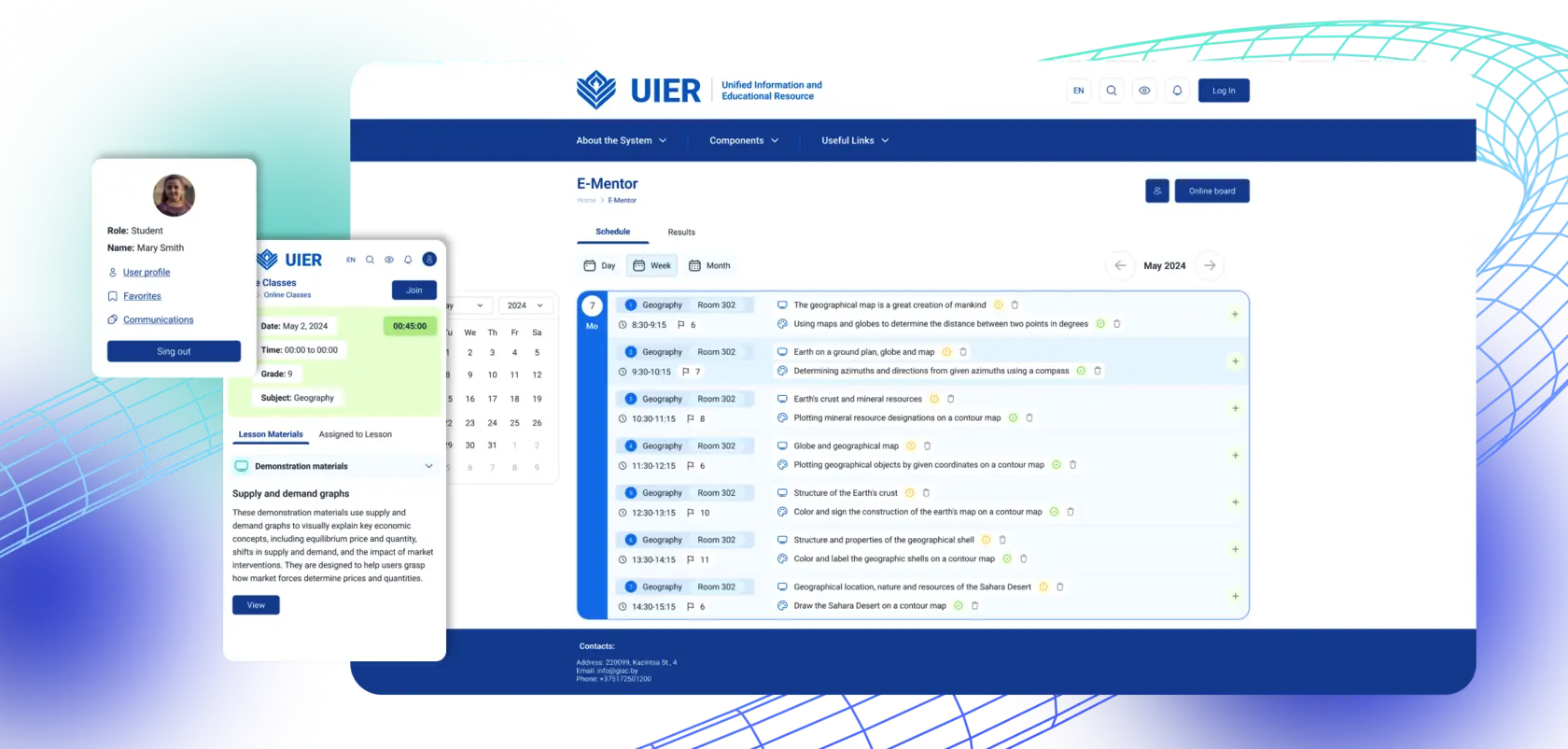
We developed a student knowledge base, lesson creation tools, and modules for tests, simulators, and viewing materials, all integrated with educational organizations’ business process systems.
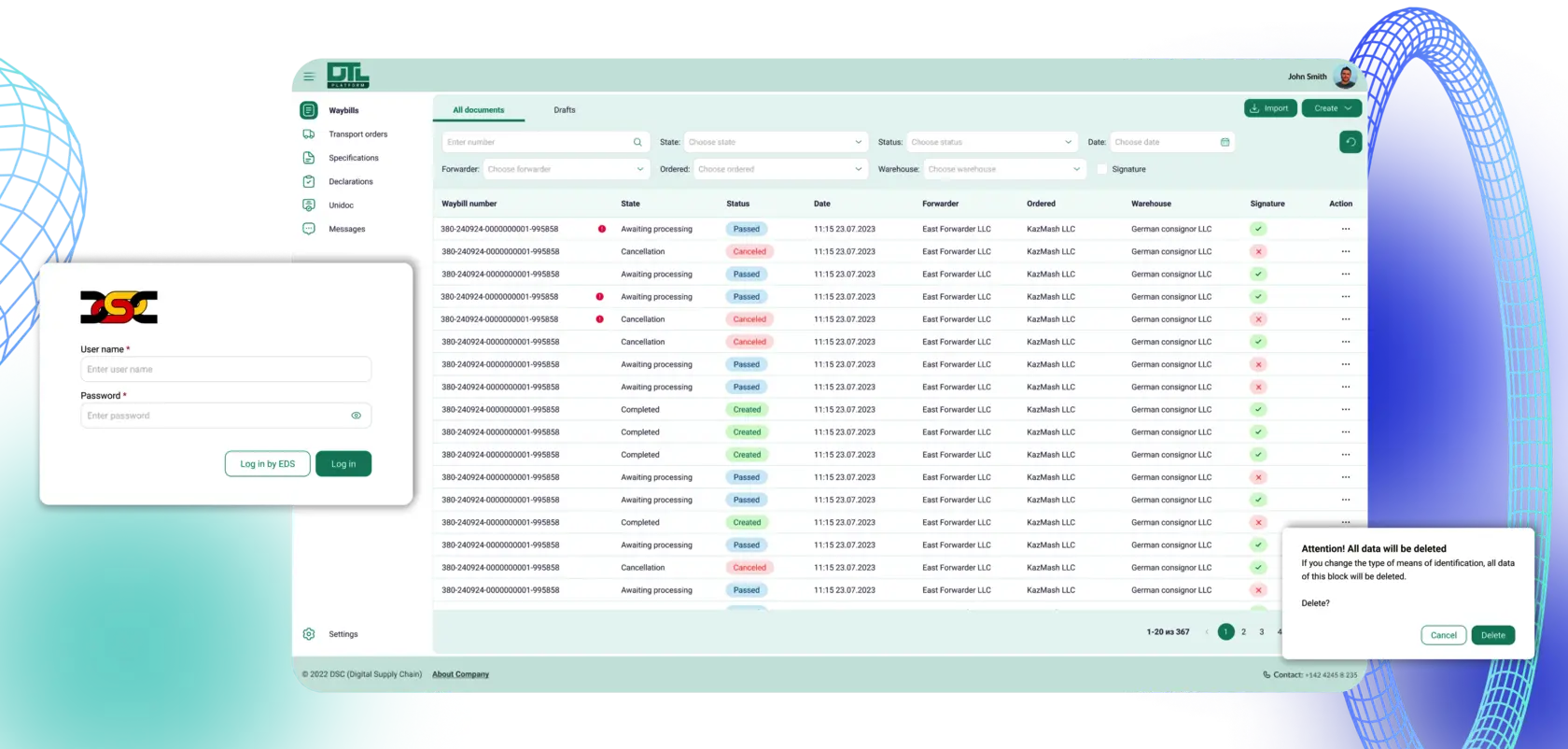
CompleteSoft developed Digital Trade Logistic Platform which includes a vehicle and driver directory, a mobile app with GPS monitoring, and a system for planning and executing transport requests.
Result: 25% reduction in transportation planning time.
UComplete is a service designed for life insurance companies. It is an integrated web-based system that allows insurance company clients to independently create and sign insurance policies electronically over the Internet.
ExamComplete is a digital platform for U.S. insurance companies, enabling medical professionals to electronically sign life and health insurance policies with clients online.
A custom-built Eurasian logistics platform that unifies all freight stakeholders into a single digital ecosystem and scalable cross-border e-logistics integration.
Result: presence in 20 countries, 7 million users.
A custom AI logistics agent was designed and implemented to automate document processing, shipment coordination, multilingual communication, and risk analytics with full integration into the existing TMS.
Result: 70% reduction in manual document processing.
CompleteSoft’s AI Assistant transformed the tourism company’s customer support by delivering instant, multilingual, and personalized responses that boosted conversions while cutting response time and operational costs.
Why companies choose us for front-end development services
In practice, what matters is fairly simple. The code should be understandable. Changes should not break unrelated parts of the product. Communication should be clear enough that decisions don’t get lost. We focus on those things.
Predictable delivery, not just speed
We focus on delivering parts of the interface that can be tested early. This reduces risk and gives you something usable sooner, instead of waiting for a full release.
Front-end that supports business goals
Decisions are not only technical. We consider conversion, user flows, and real usage patterns so the interface actually supports how your product makes money.
Performance as a built-in constraint
We don’t “optimize later.” Load time, responsiveness, and bundle size are part of everyday development decisions, which prevents expensive fixes down the line.
Code that other developers can work with
We structure the components in such a way that they are understandable to the new developer joining the project. This reduces adaptation time and long-term maintenance costs.
Ability to work inside existing systems
Many projects are not greenfield. We can adapt to your current stack, processes, and constraints without forcing unnecessary rewrites.
Clear technical communication
We explain trade-offs and decisions in plain terms, so product owners and stakeholders understand what is being built and why.
What clients say about our front-end development services
“We especially liked their flexibility. When there was a need to integrate an additional module, the team quickly adapted to the changes, which allowed us to complete the project with new requirements in a short time.”
“CompleteSoft’s work led to a 60% reduction in manual work and a 25-30% increase in order processing speed. The team was easy to communicate with, quick to answer, and always ready to clarify things. CompleteSoft’s project management was great; they always answered questions and delivered on time.”
We are also working on backend systems, APIs, and full-stack application development. In some projects, we take full responsibility for implementation, in others we support an existing team where additional experience is required.
Mobile app development
MVP development
Web development
Cross-platform development
Al development
Frontend development
Backend development
We choose technology that suits best your specific business goals!
Can you work with an existing codebase that wasn’t built well?
Yes, and this is a fairly common phenomenon. As a rule, a complete rewrite is not required. We start by identifying the parts that cause the most problems and gradually improving them. Over time, this leads to a system that is easier to understand and safer to change.
How do you choose between React, Vue, Angular, and other tools?
The choice depends on the context, not on preferences. We take into account the complexity of the product, the team that will support it, and how long it will take to develop. If a company already uses a certain stack, it often makes sense to stick with it, unless there are clear restrictions.
How do you make sure the front-end stays maintainable over time?
We try to keep the codebase structured in such a way that another developer can understand it without needing a background context. This means clear component boundaries, predictable data flow, and common conventions.
Do you only work on new projects, or can you join an existing team?
We often join existing teams. In such cases, the goal is to support internal developers. This can mean helping to make architectural decisions, improve individual system components, or simply increase development capabilities.
What happens after the release?
Most products continue to change after launch. We usually take part in improvements, performance adjustments, and troubleshooting that only occur in real-world use.
How long does a typical front-end project take?
The timing varies depending on the complexity. A small project may take several weeks, while the development of a larger application may take several months or continue continuously. What matters is how the work is structured, especially when requirements change over time.