A hybrid approach is practical when you want one product to work across platforms without building everything twice. As a hybrid app development company, we create apps that run reliably on both iOS and Android, while keeping the codebase easier to manage. The priorities are: consistent performance, controlled costs, and the ability to scale without rework.
We don’t see a mobile app as something you launch and leave behind. It’s an evolving product, so we build it in a way that supports changes, updates, and growth from the beginning.
As a hybrid mobile app development company, we work across the full development cycle. Some projects begin with an idea, others with an existing product that needs restructuring.
React Native app development
Our services include React Native for cases where speed and flexibility matter. It allows quick iterations without losing control over performance.
Flutter app development
We develop with Flutter when UI consistency is critical. It’s a good fit for products where design precision and smooth interactions are a priority.
Hybrid app migration
As a hybrid app development agency, we help move existing solutions to a hybrid architecture. This usually reduces maintenance effort and simplifies future updates.
MVP & prototype development
A hybrid application often starts small. We build MVPs to test core assumptions before investing in full development. Each hybrid application at this stage is limited in scope but clear in purpose.
Mobile backend development
Every mobile app depends on backend logic. We create APIs and infrastructure that keeps mobile app stable under load and at the same time flexible for future changes. Since an app with weak backend logic rarely scales well, we address this early.
UI/UX design & prototyping
We design each mobile application around actual user flows. Wireframes and prototypes are used to remove uncertainty before development starts.
AI-Powered hybrid apps
Some products benefit from AI features, others don’t. Where it makes sense, we integrate automation, recommendations, or data-driven logic into the hybrid application.
Maintenance & support
After release, the work continues. We monitor performance, fix issues, and adapt the product as requirements change.
How we build hybrid apps
The hybrid mobile app development services process is structured but not rigid. Each step exists to reduce risk and avoid rework later.
Define requirements and constraints
We clarify what the product needs to do, who will use it, and what limitations exist – budget, timeline, integrations. This avoids misalignment later.
Plan architecture and select tools
We choose the stack based on the product, not trends. Decisions here affect performance, scalability, and long-term maintenance.
Design user flows and interfaces
Instead of jumping into development, we map how users interact with the app. This helps catch gaps early, when changes are still inexpensive.
Develop in iterations
Work is split into small, testable parts. This keeps progress visible and allows adjustments without disrupting the whole project.
Test across devices and scenarios
We check not just functionality, but how the app behaves under different conditions – network issues, device variations, real usage patterns.
Maintain and improve based on real usage
After launch, decisions rely on data and feedback. This is where most meaningful improvements happen.
Our portfolio
We’ve worked on products in different stages from early MVPs to systems already in production. The common factor is not the industry, but the need for a reliable hybrid solution that can evolve over time.
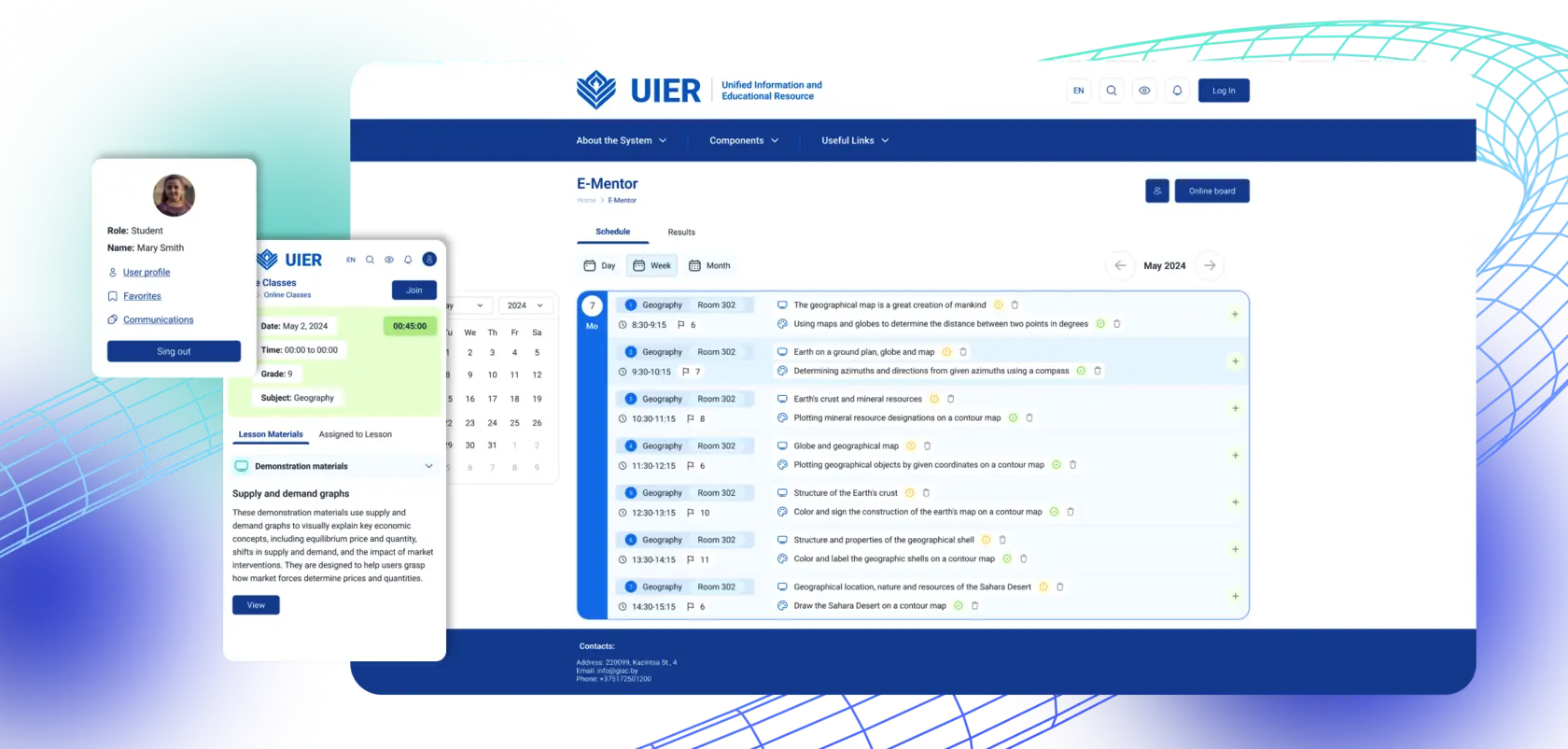
We developed a student knowledge base, lesson creation tools, and modules for tests, simulators, and viewing materials, all integrated with educational organizations’ business process systems.
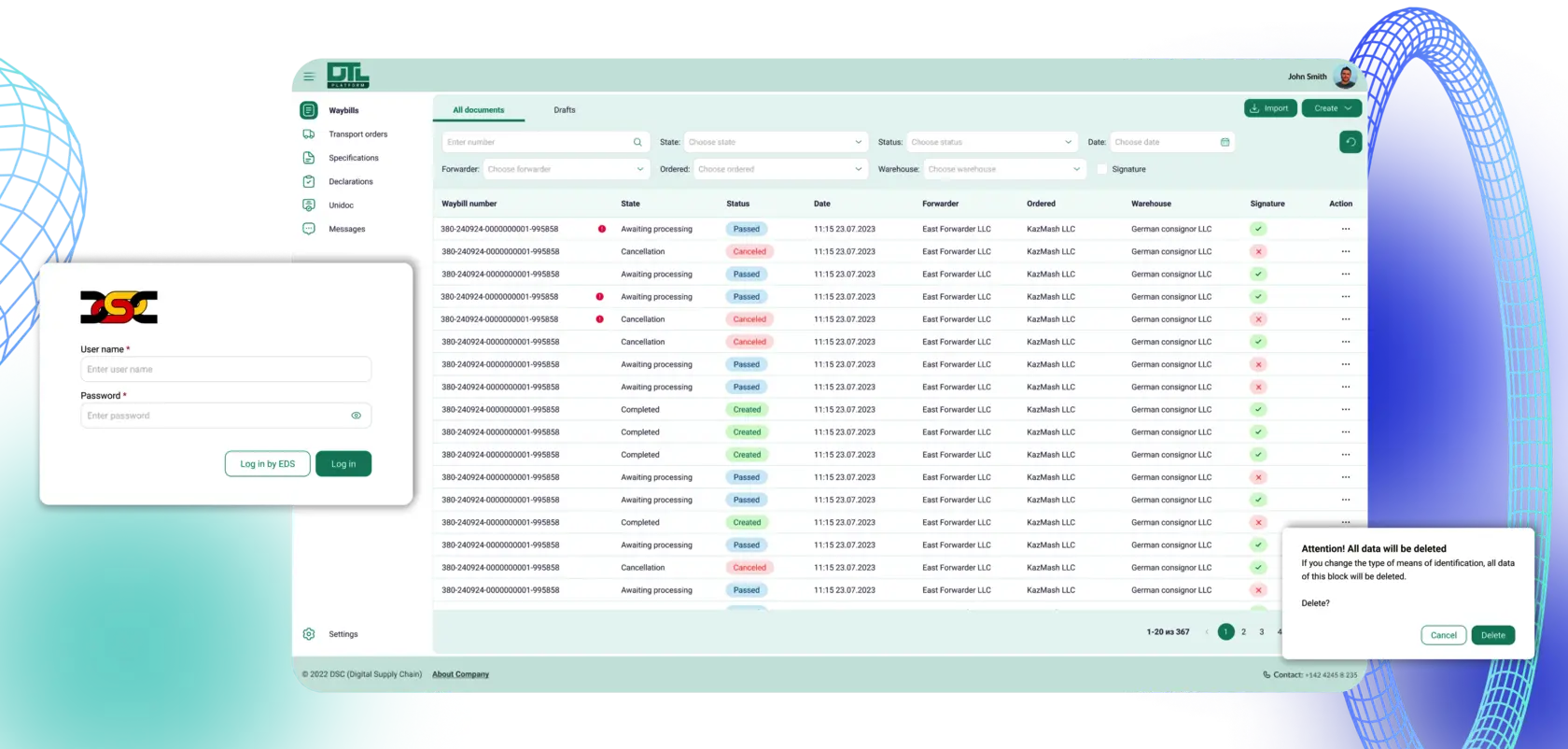
CompleteSoft developed Digital Trade Logistic Platform which includes a vehicle and driver directory, a mobile app with GPS monitoring, and a system for planning and executing transport requests.
Result: 25% reduction in transportation planning time.
UComplete is a service designed for life insurance companies. It is an integrated web-based system that allows insurance company clients to independently create and sign insurance policies electronically over the Internet.
ExamComplete is a digital platform for U.S. insurance companies, enabling medical professionals to electronically sign life and health insurance policies with clients online.
A custom-built Eurasian logistics platform that unifies all freight stakeholders into a single digital ecosystem and scalable cross-border e-logistics integration.
Result: presence in 20 countries, 7 million users.
A custom AI logistics agent was designed and implemented to automate document processing, shipment coordination, multilingual communication, and risk analytics with full integration into the existing TMS.
Result: 70% reduction in manual document processing.
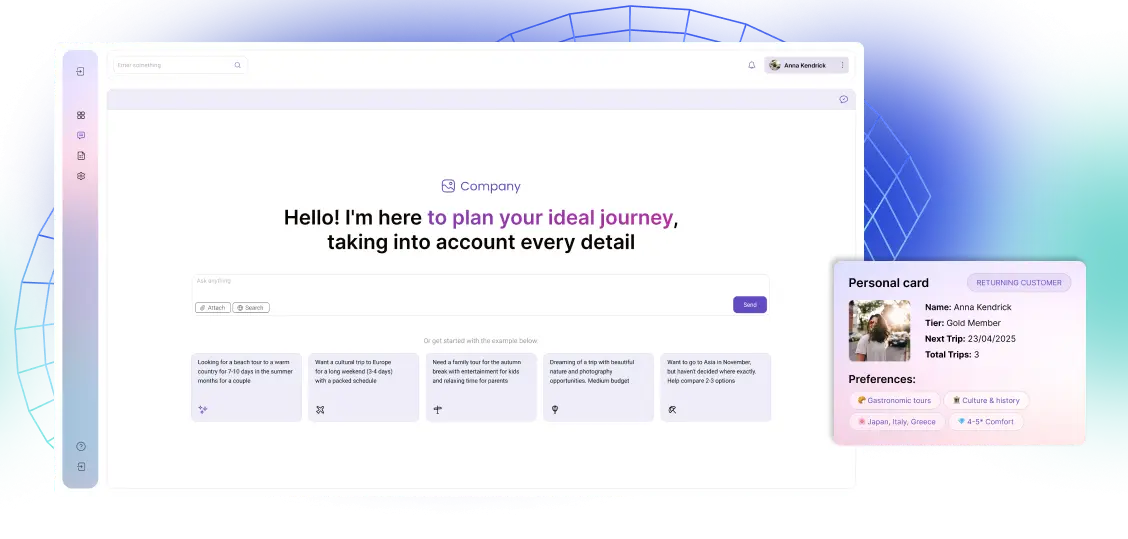
CompleteSoft’s AI Assistant transformed the tourism company’s customer support by delivering instant, multilingual, and personalized responses that boosted conversions while cutting response time and operational costs.
Why businesses choose CompleteSoft for hybrid app development
Companies usually come to us when they need clarity and execution without unnecessary complexity:
Balanced cost and speed
Hybrid development reduces duplication. One team, one codebase, faster delivery compared to building separate native apps.
Easier maintenance
Updates are applied once instead of twice. This simplifies long-term support and reduces operational overhead.
Scalability without rebuilds
With the right architecture, a hybrid product can grow in features and users without needing a full rewrite.
Consistent user experience
Interfaces and logic remain aligned across platforms, which avoids fragmentation in the product experience.
Flexibility in development
It’s possible to combine shared code with native modules when needed, instead of choosing one extreme.
Predictable planning
Fewer unknowns in development lead to more accurate timelines and budgets.
What our clients say about us
“We especially liked their flexibility. When there was a need to integrate an additional module, the team quickly adapted to the changes, which allowed us to complete the project with new requirements in a short time.”
“CompleteSoft’s work led to a 60% reduction in manual work and a 25-30% increase in order processing speed. The team was easy to communicate with, quick to answer, and always ready to clarify things. CompleteSoft’s project management was great; they always answered questions and delivered on time.”
Hybrid is not always the right choice. We also work with native development and product strategy, which helps us recommend the approach based on the situation rather than a fixed preference.
Android app development
iOS app development
Flutter app development
We choose technology that suits best your specific business goals!
Regular input is important, especially during early stages and key decisions. At the same time, the process is structured so you don’t need to manage day-to-day development.
How do I know if hybrid app development services are the right choice?
It depends on priorities. If speed, budget, and cross-platform consistency matter more than maximum low-level performance, hybrid is usually a good fit. If the product relies heavily on complex graphics or hardware-specific logic, native may be more appropriate.
What are the main limitations?
Most limitations appear in edge cases – for example, highly complex animations or intensive background processing. These can often be handled with native modules, but it adds complexity. For typical business products, this is rarely a blocker.
How does performance compare to native apps?
In most scenarios, the difference is minimal and not noticeable to users. Performance issues usually come from poor architecture rather than the technology itself. With proper setup, a mobile app built this way handles standard workloads without problems.
Can a hybrid app scale to a large number of users?
Yes, if the backend and infrastructure are designed correctly. Scalability is less about the front-end approach and more about how data, APIs, and services are structured.
How long does development take?
An MVP can take a few months. A full product depends on scope, integrations, and complexity. Hybrid development typically shortens timelines compared to building two separate apps.
What happens after launch?
After release, the focus shifts to monitoring, fixing issues, and improving features based on usage. This stage often defines the long-term success of the product more than the initial launch.
Can you update or rebuild an existing app?
Yes. We often work with existing products – either improving the current codebase or migrating it into a hybrid application if that makes more sense.
How involved do I need to be in the process?
Regular input is important, especially during early stages and key decisions. At the same time, the process is structured so you don’t need to manage day-to-day development.