

Web applications are not the same as “websites with extra features.” These are full-fledged digital products that are used by banking systems, SaaS platforms, medical portals, e-commerce markets, and internal corporate tools. Companies are using web applications as their primary digital infrastructure.
Meanwhile, market research estimates the web development market will reach over USD 80 billion in 2026, reflecting sustained demand for web and web-based applications across industries.
So, what makes web applications so powerful today?
Simply put, they combine accessibility, scalability, and cross-platform compatibility. Users can access them instantly through a browser (no installation required) while businesses can update, scale, and improve them continuously.
In this article, we will explore what is a web app, how web applications work, their architecture, real-world examples, their advantages and limitations, and the key trends shaping web development in 2026.
Let’s start with the fundamentals: how web applications actually work.
How web applications work
At a basic level, a web application is software that runs on a remote server and is accessed through a web browser. Users do not install it on their devices. Instead, they interact with them via the Internet.
Although modern web apps may look complex, their core logic follows a clear sequence:
- The user sends a request
For example, a user logs in, clicks a button, or submits a form. The browser sends this request to the web server.
- The server processes the request
The server receives the request and runs the necessary backend logic. This may include authentication, data validation, or business calculations.
- The application interacts with the database
If needed, the system retrieves or updates data in a database (for example, user information, orders, or messages).
- The server sends a response back
The server returns the processed data to the browser.
- The browser updates the interface
Modern frontend frameworks dynamically update the page without reloading it completely, creating a smooth, app-like experience.
In simple terms, web applications work on a client–server model. The browser (client) handles the user interface, while the server manages data and business logic.
However, in 2026, this process is often enhanced by:
- Cloud infrastructure
- APIs and microservices
- Real-time communication (WebSockets)
- Content delivery networks (CDNs)
Thanks to this, today’s web apps are fast, scalable, and capable of handling millions of users simultaneously.
Typical architecture of a web app
Most web applications have a layered and modular architecture. This makes them scalable, easy to maintain, and easier to upgrade over time.
Traditionally, web applications have been created using a three-tier architecture. Today, this concept still exists, but it has evolved thanks to cloud and microservice technologies. Thus, a typical modern web application includes:
- Frontend (Client Side)
This is what users see and interact with in their browser. It includes the interface, design, animations, and user logic. Common technologies: HTML, CSS, JavaScript, and frameworks like React, Vue, or Angular.
- Backend (Server Side)
This layer handles business logic, authentication, data processing, and communication with external services. It is usually built with technologies like Node.js, Python, Java, or .NET.
- Database
Stores structured or unstructured data — such as user profiles, transactions, product catalogs, or analytics data. Examples include relational databases (PostgreSQL, MySQL) and NoSQL databases (MongoDB).
- API Layer
Modern web apps often expose REST or GraphQL APIs to communicate between frontend and backend — or with third-party services.
- Cloud Infrastructure
Most web apps in 2026 run in the cloud using providers like AWS, Azure, or Google Cloud. This allows automatic scaling and high availability.
- CDN (Content Delivery Network)
Static assets such as images and scripts are distributed globally to improve performance and reduce latency.
In short, modern web application architecture is designed for growth so that businesses can start small and scale to millions of users without rebuilding the entire system.
Examples of web applications
To better understand what web applications look like in practice, let’s explore some real-world examples you’ve probably used at least once.
Google Docs
A cloud-based document editor that allows users to create, edit, and collaborate in real time directly in the browser.
Gmail
A fully interactive email platform that works entirely as a web application without requiring local installation.
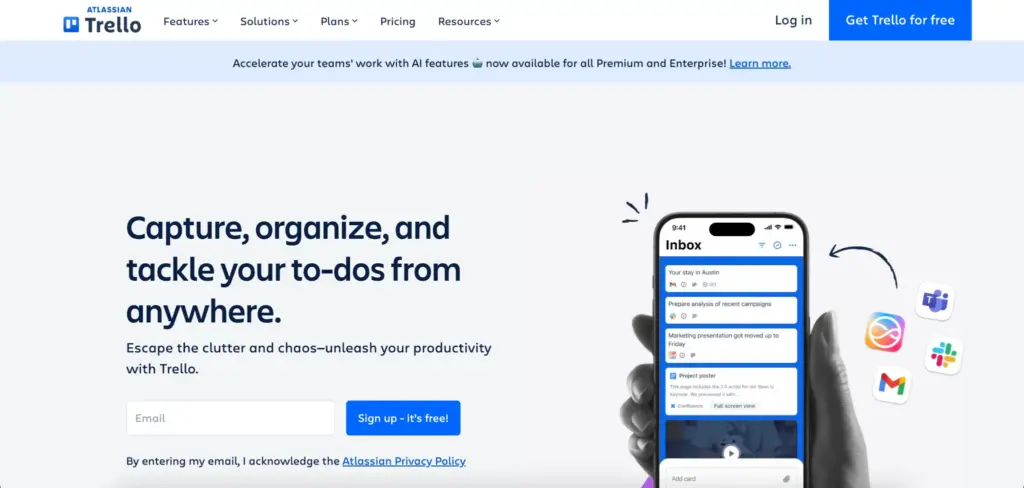
Trello
A task and project management tool that uses a dynamic interface and real-time updates.
Slack
A team communication platform accessible via browser, offering messaging, file sharing, and integrations.
Salesforce
A large-scale enterprise CRM system delivered primarily through web technologies.
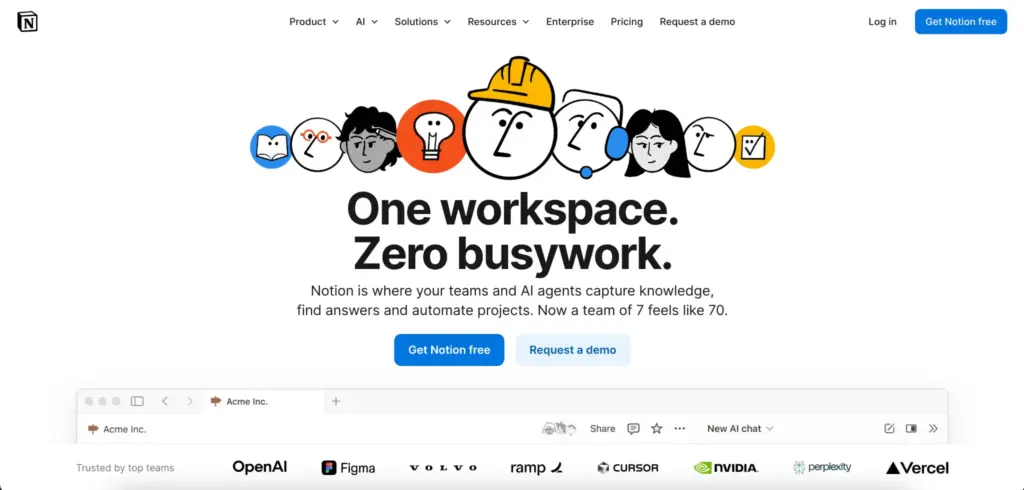
Notion
A workspace tool combining notes, databases, and collaboration features in a browser-based interface.
Importantly, web applications are not limited to global platforms. Many companies also build:
- Customer portals
- Online booking systems
- SaaS dashboards
- E-learning platforms
- Internal HR or ERP systems
In fact, most modern SaaS products are essentially web applications running in the cloud.
What is a PWA (Progressive Web App)?
A Progressive Web App (PWA) is a special type of web application that blends the accessibility of a traditional website with the performance and user experience of a mobile app. Instead of being downloaded through an app store, a PWA runs in a browser but can be installed on a user’s device and behave much like a native app.
PWAs are built using standard web technologies like HTML, CSS, and JavaScript, but they leverage modern browser capabilities such as:
- Service workers. It is scripts that run in the background to cache assets and enable offline use.
- Web app manifests. These include metadata that tells the browser how the app should behave when installed (e.g., icon, name, startup screen).
- Push notifications that send updates directly to the user, even when the app isn’t open.
This combination allows PWAs to deliver many of the experiences we expect from native apps (like fast load times, offline functionality, responsive layouts, and seamless installation) without the friction of app stores.
The global PWA market was valued at around $1.4 billion in 2023 and is projected to grow rapidly over the coming decade, reaching between $9–21 billion by the early 2030s depending on the forecast model.
As of late 2023, more than 54,000 websites were using PWA technology, indicating adoption across industries such as e-commerce, media, and travel.
Furthermore, major brands like Starbucks and Pinterest have publicly shared improved metrics after moving to a PWA, including higher engagement and faster performance.
Difference between web app, native app and hybrid app
Now that we understand what a PWA is, it’s important to place it in a broader context. Businesses often ask the same question: should we build a web app, a native app, or a hybrid app?
Although these approaches may look similar to end users, technically they are very different. Let’s break it down in a clear and practical way.
Web application
A web app runs in a browser and is accessed via a URL. It does not require installation from an app store. It is typically built using HTML, CSS, and JavaScript, and it works across all platforms.
Examples include platforms like Google Docs or Trello.
Key characteristics:
- No installation required
- Single codebase for all platforms
- Easy updates (deployed on the server)
- Lower development and maintenance cost
- Limited deep access to device hardware (compared to native apps)
Web apps are great for SaaS platforms, dashboards, marketplaces, internal business systems, or customer portals.
Native application
A native app is built specifically for one operating system (usually iOS or Android) using platform-specific programming languages.
For example, iOS apps are built using Swift or Objective-C while Android apps are built with Kotlin or Java
Native apps are distributed via app stores such as Apple App Store or Google Play.
Key characteristics:
- Installed directly on the device
- Full access to hardware features (camera, GPS, Bluetooth, biometrics, etc.)
- High performance and smooth animations
- Better integration with operating system features
- Separate codebases for each platform (higher cost)
Native apps are often chosen for high-performance applications like mobile banking, gaming, AR/VR apps, or software that relies on device hardware.
Hybrid application
A hybrid app is a mix between web and native technologies. It is essentially a web app wrapped in a native container, allowing it to be distributed via app stores.
Frameworks such as React Native or Flutter allow developers to write shared code while still producing installable apps.
Key characteristics:
- Single shared codebase (mostly)
- Distributed via app stores
- Access to device APIs via plugins
- Lower cost than fully native development
- Performance slightly lower than pure native apps
Hybrid apps are often used when businesses want app-store presence but also need to control costs and development time.
| Criteria | Web App | Native App | Hybrid App |
| Installation | No | Yes | Yes |
| App store required | No | Yes | Yes |
| Cross-platform | Yes | No (separate builds) | Mostly |
| Hardware access | Limited | Full | Moderate |
| Development cost | Lower | Higher | Medium |
Benefits of web applications for business
Now that we’ve compared web, native, and hybrid apps, let’s focus on why many companies in 2026 choose web applications as their primary digital solution. Here are the key benefits.
- Cross-platform accessibility
One of the biggest advantages of web applications is universal access. Users can open a web app on any device with a browser regardless of operating system.
- Lower development and maintenance costs
Because web apps use a single codebase, businesses avoid duplicating development efforts.
According to Stack Overflow Developer Surveys, JavaScript and web technologies consistently rank among the most widely used technologies globally. This large talent pool makes hiring easier and often more cost-effective compared to specialized native development.
- Faster time to market
There is no app store approval process, and development cycles are usually shorter. This is particularly important for startups and companies testing new ideas. In competitive markets, speed can be a decisive advantage.
- Scalability through cloud infrastructure
Modern web apps are typically hosted in the cloud using platforms like Amazon Web Services, Microsoft Azure, or Google Cloud.
- Easy updates and continuous improvement
With web apps, improvements are deployed centrally. There is no need to wait for users to install updates. This makes it easier to implement security patches, UX improvements, new features, etc.
- SEO and discoverability
Unlike native apps, web applications can be indexed by search engines (if public). This creates additional marketing and acquisition opportunities through organic search. For many B2B and SaaS companies, this is a major advantage.
- Integration capabilities
Web apps easily integrate with CRM systems, payment gateways, analytics platforms, ERP systems, third-party APIs.
This makes them ideal for building digital ecosystems rather than isolated products.
Disadvantages and limitations of web apps
Although web applications offer many advantages, they are not a perfect solution for every scenario. Let’s look at the main constraints.
- Limited access to device hardware
While modern browsers support APIs for camera, geolocation, and even limited Bluetooth access, deep hardware integration (advanced biometrics, background system processes, AR capabilities, complex sensor usage) remains more reliable in native environments.
For example, high-performance 3D games or advanced AR applications are typically built natively rather than as web apps.
- Performance constraints
Although modern frameworks and browser engines are highly optimized, web apps may still struggle with heavy graphical processing, complex animations, large real-time data operations, intensive background tasks.
Native applications generally provide better raw performance because they are optimized for a specific operating system.
- Dependence on internet connection
Traditional web apps require a stable internet connection. Progressive Web Apps improve this with caching and offline capabilities, but fully offline functionality is still more limited compared to native apps.
- Browser compatibility issues
Although modern browsers are largely standardized, developers still need to test across environments (Chrome, Safari, Edge, Firefox) to ensure consistent behavior. This adds testing complexity.
- Security risks
Because web apps are publicly accessible through the internet, they are frequent targets for cyberattacks.
However, it’s important to note that native apps are not immune to security risks either. But they simply face different types of vulnerabilities.
- App store visibility limitations
Web apps are not listed in app stores by default. For some consumer-facing products, presence in the Apple App Store or Google Play can be important for discoverability and user trust. Although PWAs can be installed, they still do not always provide the same level of visibility as native apps.
Web application trends in 2026
The main shift that we are witnessing today is this: companies are no longer wondering if they need a web application, but how advanced and ready for the future it should be. So, below are the most important trends determining the future of web apps this year.
AI-powered web applications
Artificial intelligence has moved from experimentation to day-to-day implementation. Modern web applications include artificial intelligence-driven features such as intelligent recommendations, automated assistants, intelligent document processing, and predictive analytics.
According to McKinsey & Company (The State of AI reports, 2023–2024), more than 50% of organizations have adopted AI in at least one business function, and usage continues to expand. This directly influences web based application design, as AI modules are now embedded inside SaaS dashboards, CRM systems, analytics platforms, and customer portals.
Cloud-native and serverless architecture
Another defining trend is the transition to fully cloud-based development. Web applications are built using managed cloud services, containers, and serverless features, rather than traditional fixed servers.
Gartner predicts further double-digit growth in global cloud spending driven by demand for scalable and resilient digital infrastructure. Companies need systems that automatically handle sudden spikes in traffic, users around the world, and the rapid expansion of their product range.
Micro-frontend and modular web app development
Large web platforms are abandoning monolithic front-end systems. Instead, they use a micro-interface architecture in which different teams manage independent parts of the interface.
This approach increases flexibility and reduces deployment risks. It also helps accelerate innovation, as teams can release updates independently without affecting the entire system.
For enterprise SaaS and fast-growing digital platforms, modular architecture is becoming more of a standard practice than an advanced option.
Security-first and zero-trust models
As digital ecosystems grow, cybersecurity risks increase as well. Security should be built into web applications from the architecture level.
According to the IBM Cost of a Data Breach Report 2023, the global average cost of a data breach reached 4.45 million USD, highlighting the financial impact of weak security strategies.
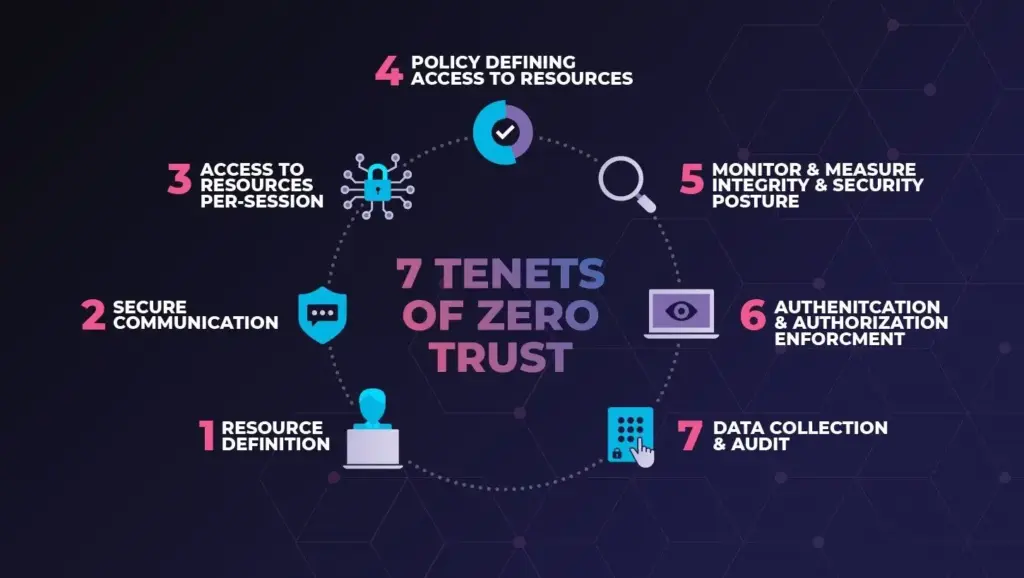
In response, companies are implementing zero-trust principles, advanced identity management, multi-factor authentication, encrypted APIs, and continuous monitoring systems. Secure-by-design architecture is now a baseline expectation for modern web applications.
Performance as a competitive advantage
Users’ expectations for speed continue to grow. Even small delays can reduce engagement and conversion.
For instance, Google pays special attention to performance metrics such as core web metrics as part of its ranking algorithms. This forces companies to prioritize download speed, responsiveness, and visual stability.
Low-code integration and automation
Finally, web ecosystems in 2026 will often combine custom web application development with low-code platforms and automation. While complex products still require professional development, enterprises are integrating workflow automation and code-free tools into their web infrastructure.
Overall, the main trend is clear: web applications are becoming more intelligent, distributed, secure, and performance-driven. They are no longer simple browser-based tools — they are strategic digital platforms designed for long-term scalability and continuous evolution.